
In the fast-paced digital world, where attention spans are shorter than ever, capturing and retaining a website visitor’s interest is the ultimate challenge. Imagine a potential customer landing on your site after a quick Google search, only to be met with silence. They have a simple question, but your contact form seems too formal, and the “contact us” page lists an email address with a promised 48-hour response time. Frustrated, they hit the back button, and just like that, a valuable lead is lost.
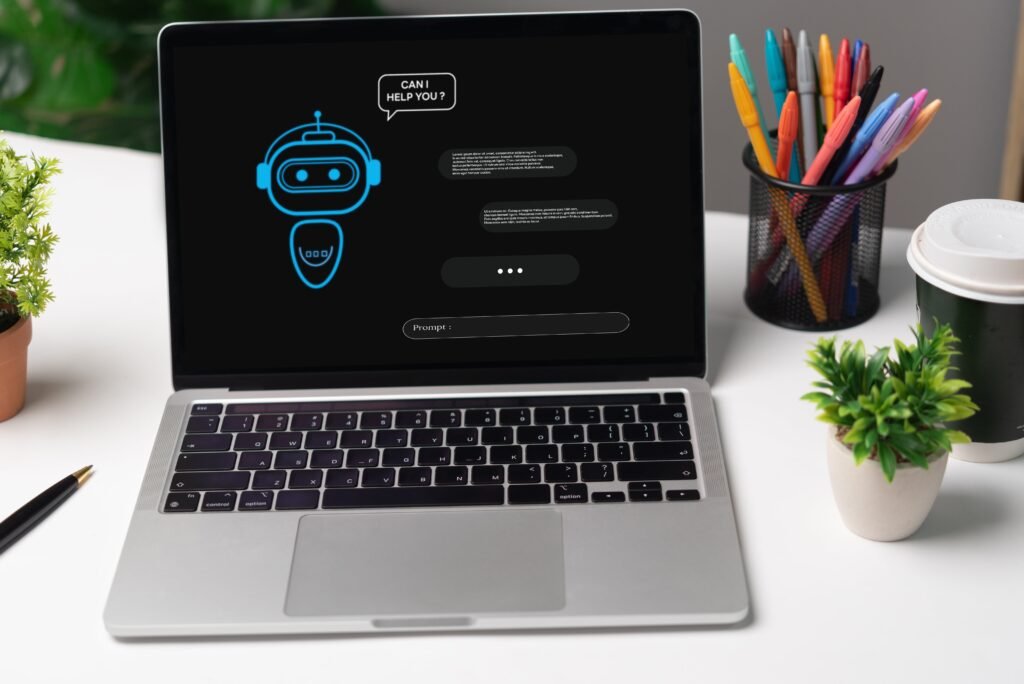
This scenario plays out on thousands of websites every single day. But what if you could offer every visitor an instant, helpful, and personalised conversation the moment they arrive? This is no longer a futuristic concept; it’s the tangible reality delivered by an AI Website Chatbot. These intelligent assistants are revolutionising the way businesses interact with their online audience, turning passive browsing into active engagement and conversion.
What Exactly is an AI Website Chatbot?
At its core, an AI Website Chatbot is a sophisticated piece of software powered by Artificial Intelligence and Natural Language Processing (NLP) that can simulate human-like conversations. Unlike the rigid, menu-based chatbots of old, a modern AI-powered chatbot doesn’t just follow a script. It understands the intent behind a user’s questions, learns from interactions, and provides contextually relevant answers in real-time.
Think of it as a dedicated, 24/7 customer service representative who never sleeps, never takes a break, and can handle an infinite number of conversations simultaneously. It’s designed to understand queries like “What’s your delivery cost to Edinburgh?” or “Can you compare your premium and basic plans?” and provide accurate, immediate answers, just as a human would.
Why Your Business Needs an Intelligent Chat Assistant
Integrating an AI chatbot is no longer a luxury reserved for tech giants; it’s a strategic necessity for businesses of all sizes. The benefits are direct and impactful:
1. 24/7 Lead Generation and Customer Support
The internet doesn’t clock out at 5 PM. An AI chat assistant ensures your website is always “open for business,” capturing leads and answering questions outside of standard office hours, across different time zones, and even on public holidays.
2. Instant Response to Customer Queries
Speed is paramount. A study by Google found that 53% of mobile site visitors leave a page that takes longer than three seconds to load. Similarly, visitors expect instant answers to their questions. An AI chatbot provides immediate responses, drastically reducing wait times and preventing frustration.
3. Significant Reduction in Operational Costs
By automating responses to a large volume of frequently asked questions, an automated website chat system frees up your human support team to focus on more complex, high-value issues. This leads to increased efficiency, lower support costs, and a more strategically deployed workforce.
4. Qualifying Leads and Boosting Conversions
An advanced chatbot can do more than just answer questions. It can proactively engage visitors, ask qualifying questions, and even guide them towards a purchase or booking. For instance, it can help a user find the right product, schedule a demo, or direct them to a pricing page, significantly increasing conversion rates.
Key Features to Look for in a Modern AI Chatbot
Not all chatbots are created equal. When selecting a solution for your website, ensure it offers these essential features:
- Natural Language Processing (NLP): This is the technology that allows the bot to understand slang, typos, and conversational language, making interactions feel natural and human.
- Easy Integration and No-Code Builders: The best solutions, like LinX Chatbot, allow you to build, customise, and deploy your bot without needing a team of developers. Look for a simple, drag-and-drop interface.
- Seamless Multi-Platform Deployment: Your bot should work effortlessly across your website, Facebook Messenger, WhatsApp, and other channels from a single, centralised dashboard.
- Human Handoff Capability: A sophisticated chatbot knows its limits. It should smoothly transfer the conversation to a live human agent when a query becomes too complex, ensuring the customer always feels heard and supported.
- Comprehensive Analytics: To continuously improve, you need data. Your chatbot should provide insights into common customer questions, conversation paths, and user satisfaction, helping you refine your strategy.
LinX Chatbot: A Prime Example of Intelligent Customer Engagement
When searching for a robust and user-friendly solution that encapsulates all the features mentioned above, it’s worth exploring what established providers offer. For businesses seeking a powerful yet intuitive AI Website Chatbot, platforms like LinX Chatbot provide a compelling case study in effective implementation.
Such platforms are designed with the user in mind, offering a no-code environment that empowers marketing and support teams to build and manage sophisticated chat flows. The ability to train the AI on your specific business data, integrate with popular CRM and booking systems, and maintain a consistent brand voice across all conversations are hallmarks of a mature chatbot solution. To see how these principles are put into practice and to explore a platform dedicated to driving customer engagement, you can learn more about their approach at https://www.linxchatbot.com/.
Implementing Your AI Chatbot for Maximum Impact
Simply installing a chatbot isn’t enough. To maximise its effectiveness, follow these best practices:
- Define a Clear Purpose: Decide the primary goal of your bot. Is it for lead generation, customer support, or both?
- Craft a Warm Welcome: Design an engaging greeting message that invites conversation. Instead of a generic “Hello,” try “Hi there! Looking for help finding the right product or answering a question? I’m here to help 24/7.”
- Train It Thoroughly: Feed your chatbot with your FAQs, product information, policy details, and other relevant data. The more it knows, the more helpful it will be.
- Be Transparent: Let users know they are talking to an AI. This manages expectations and builds trust. A simple “I’m an AI assistant” in the bot’s profile is sufficient.
- Continuously Optimise: Regularly review the chat logs and analytics. Identify where the bot succeeded and where it struggled, and use this data to train and improve its responses over time.
Conclusion: The Future of Customer Interaction is Here
The digital landscape is evolving, and customer expectations for instant, personalised service are higher than ever. An AI Website Chatbot is not just a tool for automation; it is a powerful engine for growth, customer satisfaction, and competitive advantage. By providing immediate, intelligent, and helpful interactions, you can transform your website from a static brochure into a dynamic conversation hub.
Embracing this technology means saying goodbye to missed opportunities and hello to a new era of proactive, round-the-clock customer engagement. The question is no longer if you need an AI chatbot, but which one you will choose to help your business thrive.